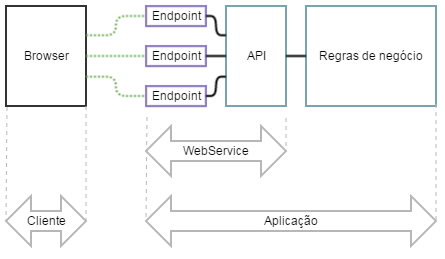
A web service is a technology that allows different applications to communicate with each other, integrate, share data and functionalities through the web in a standardized way, using markup languages such as XML or JSON and usually operating over communication protocols such as HTTP or FTP.
This means that they can be used by applications developed in different programming languages and running on different platforms.
There are several types of web services, but the three most common are:
- SOAP (Simple Object Access Protocol): is a communication protocol that uses XML to encode messages and allows communication between applications in a structured manner. SOAP is known for its robustness and ability to handle complex transactions but can be heavy in terms of bandwidth.
- REST (Representational State Transfer): is a software architecture style that uses HTTP methods (GET, POST, PUT, DELETE, etc.) to perform operations on web resources. RESTful web services are known for being simple and efficient, since they use lightweight formats such as JSON to represent data, allow the reuse of code to be consumed on various platforms, and provide greater security since the web service prevents direct access to the database
- JSON-RPC y XML-RPC: These are lightweight protocols that allow the invocation of remote procedures using object notation in JSON or XML, respectively. They are simpler than SOAP and REST, but may also be less flexible in terms of handling complex transactions.