SSML (Speech Synthesis Markup Language) is a standard used to improve the quality and naturalness of computer-generated speech. It works by inserting tags into text that specify different characteristics, such as pronunciation, intonation, pauses, and speaking rate. These tags allow you to control various aspects of the generated voice, resulting in a more realistic and human listening experience for the user.

In Voice 3.0, our phone conversation automation system, with support for SSML allows for advanced customization of the Virtual Assistant's Voice. You will be able to indicate the SSML specifications that you need to apply to your voice services to define the behavior of the interactive voice, including pauses, pitch changes, special effects and any other desired customization.
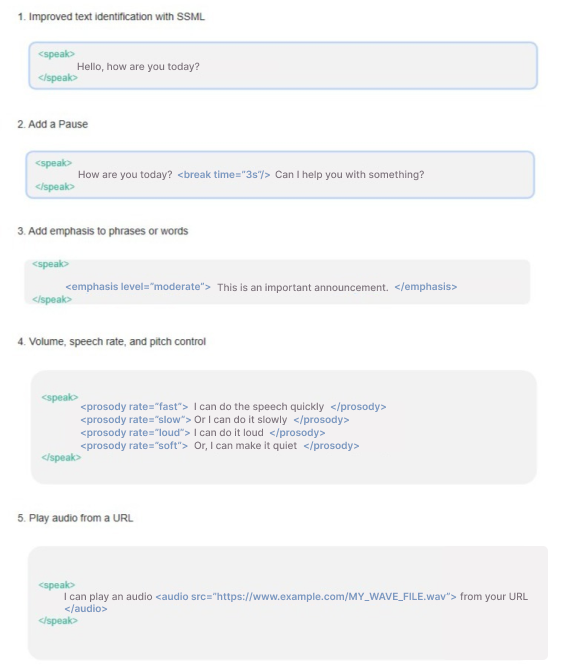
1. When you upload content to the AgentBot platform, add the SSML tags you need in each case to customize the Virtual Voice Assistant's expressions. Here are some examples of content with SSML:
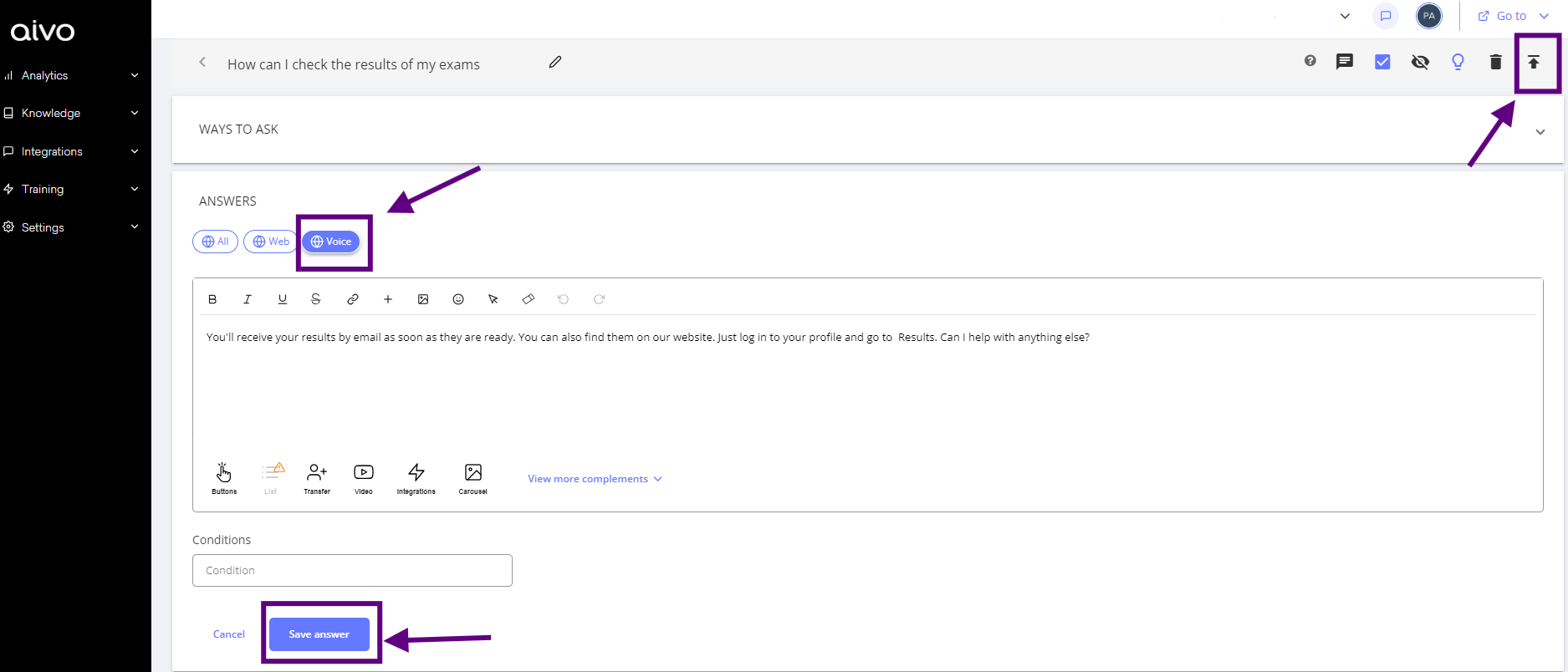
2. Select the Voice channel for that response.
3. Save your answer. In a few moments the conversion will occur, and you will be able to validate from the test chat, applying the Voice channel to test it or if you have already published the content, by contacting your number.
| ✅Keep in mind that you upload all the content in its written version, so when checking in the test chat by selecting the Voice channel it will respond in text mode, but the same as Voice would later do in voice format. |
4. Finally, the Virtual Voice Assistant will be responsible for playing them when giving the answer.